Subscribe Popup

- See more at: http://www.triposoft.com/2014/05/pop-up-feedburner-subscription-for-blogger.html#sthash.Qbk7wlmJ.dpuf

Latest stats on international students - on the up and up!

Up or down? What is happening with international students worldwide? According to the latest stats from the Institute of International Education (IIE) in their annual "Open Doors" report, the answer is quite clear - UP! 
More and more young people worldwide are going on the life-changing journey of studying in another country.


In this post, we will focus on the trend of international students traveling to the US - the largest destination for international students. Note that the trend is similar for the other global market in general. The upward trend is strong in other major study abroad destinations, such as the United Kingdom, Canada, Australia, New Zealand and Germany.


The growth trend is strong and getting stronger

The number of international students has more than doubled since the year 2000, and continues to grow. In 2013/2014, the number of international students in the US grew by 8.1%.  
Source: IIE Open Doors 2014

The countries that showed the largest growth in terms of students going to study abroad were Kuwait, Brazil, Saudi Arabia, China, Iran and Venezuela. 

Source: IIE Open Doors 2014

The gender gap is closing
In terms of gender - the gap is closing, with more and more females going abroad for studies. In 2013/2014, women comprised 44% of international students.
Source: IIE Open Doors 2014

International students contribute to the local economies
International students contribute significantly to the economies of the countries they are studying in. In the US alone, they contributed $27 billion to the local economy in 2013/2014.
The vast majority (81% for undergraduates and approximately %95 for graduate students) of the funding for the cost of living and tuition comes from the international students themselves. This is vastly different than for American students, where only 40% pay full tuition.

Source: IIE Open Doors 2014


What does the future hold?
All of the research indicates that the number of people worldwide who will move to other countries to enhance their education will continue to rise. At the current rate, the number will double itself once again by the year 2025.


Source: OECD and UNESCO data
To sum things up, the value of gaining international experiences, especially through international education is becoming more evident to more people worldwide. Even with the virtual technologies and MOOCs that enable people to take courses online, there is no viable replacement for the real-life experience of physically travelling to another country and immersing oneself in the local culture. 

Are you thinking of studying abroad? Not sure what path to take? Check out www.gradtrain.com and talk to someone from a similar background to yours who is now studying abroad or has done so in recent years.


For the full data from the IIE Open Doors report, check out this link:

http://www.iie.org/research-and-publications/open-doors/data

8 steps to finding your dream job abroad


If your objective is to find a job abroad after graduation, planning is key.
It might seem exotic to travel across the world, change landscape and experiment local food, but your only chance to make it happen is to adopt a very structured strategy. We have identified 8 steps to help you attain that objective.


1.       Select the country and focus
Identify in which country you wish to start working after graduation. If you don’t, you will just err from one lead to the other, switching from Europe to Asia without coherence, wasting time and drastically reducing your chances to find opportunities abroad. This does not mean that once chosen, you cannot change your mind or simply follow a different lead from the one initially planned.

2.       Master the language
Provided you want to find a job in Argentina, take Spanish classes, hang out with South American natives, watch the local news and learn the culture. The most radical yet effective way to learn a language is obviously a previous language immersion: go to a Spanish speaking country and find Spanish roomies.

3.       Research the country dynamics
Understand which industry is hiring, which jobs are in high-demand and adapt yourself to those dynamics. To give you an example, last week a French candidate asked me about finding a financial advisory job in Tel Aviv. That candidate did not understand the dynamics of the Israeli economy. Indeed, the financial sector there is not as developed as in other locations, unlike the startups / entrepreneurship sector that is one of the most developed in the world outside the US. Finding a financial position will be very challenging in such a case, whatever the profile of the candidate is.

4.       Make your Resume understandable
Your university / degree / grading system might not be readable for a foreign recruiter. Certifications and standardized tests will help you solve that problem. Some certifications are more recognized in certain regions of the world, so pick them wisely. At the very least, you will need a language certification that will prove your fluency in the language of your target market. If you are applying for a junior position out of college, convert your grades into the local grading system. Specialized certifications can prove useful as well, such as the CFA in Finance.


5.       Do your online networking
-         Update your LinkedIn profile with a proper picture. Remember that last profile you checked without a picture? It seemed dusty & abandoned, right? Don’t fall into that category. A nice picture of you dressed professionally will serve your applications well.
-         Reach out to Alumni. Contact Alumni from your school currently living or that previously lived in the country of your choice.You can find such people on GradTrain. 
-          Congratulate. Top executives nominations often make the news. A new Head of EMEA got appointed at your DreamCo? Shoot him a congratulations email, it works especially well to get interviews or contacts.


6.       Don’t forget the offline networking
-          Your career center must provide valuable resources and contacts to work abroad
-          Explore your immediate network: friends, family, neighbours. They will provide you with invaluable contacts. They are undoubtedly the most valuable source of information. Remember that French penfriend from highschool? Time to find him on Facebook!

7.       Seize opportunities
Opportunities are everywhere in the news. You just need some chutzpah to make it work. A US company launching a new business in Brazil? A new joint venture in Russia just got announced? A new fund specialised in South Asian investments? A local headquarter of a recognized NGO just opened? A startup just raised money to expand its operations in India? These news are fantastic opportunities to reach out to those companies and emphasize your desire to work abroad.

8.       Prepare for your interviews
Preparation is key, just as it is for any job interview. Finding an open sloat abroad is definitely harder than in your country, but don’t forget that you will be competing for the position with other candidates, and you need to demonstrate that you’re the best for the job. In addition to the required skills for the position, you will need to demonstrate your interest for the region and your language proficiency. If you consider applying in competitive sectors such as investment banking or consulting, your competitors come from all around the world and your country of origin does not matter. You will be assessed on the same criteria such as financial knowledge, mental calculation, fit interview preparation, ability to effectively handle a case interview, demonstrating analytical skills, business sense or time management.


_____

Michael Ohana is the Founder & CEO of AlumnEye, the French Leading Consultancy firm specifically dedicated to the preparation of candidates for their job interviews in highly selective fields such as Investment Banking, Financial Markets and Strategy Consulting. AlumnEye has partnerships with the best European Masters in Finance programs and has placed over 1000 candidates in the most prestigious Consulting Firms and Investment Banks.


How to access your favorite content while studying abroad

If you’ve traveled abroad before, you might have noticed that some websites and media are blocked when you’re outside of your home country. Common examples are Netflix, Pandora and Amazon Prime, which are restricted. But there’s a very simple trick to get around it. Let us guide you through it so you’re prepared when going to study abroad!


What are the website restrictions abroad?
It’s tricky to cover all the sites here because it depends on where you’re coming from and going to. When it comes to copyrighted material, popular movie sites like Netflix and Hulu or music sites like Pandora, Spotify and Beats Music offer limited access abroad.
Moreover, your local TV station’s website or sports channel subscription are usually also blocked abroad. So if you want to follow your favorite shows or sports, you’ll need to find a workaround to get access.

On top of these restrictions, some countries censor their internet. China is censoring heavily, for example you can’t access Facebook, Twitter, YouTube and a lot of other sites from there. Other prominent censors include the Gulf States where a lot of social media and VoIP apps like Skype and Viber are blocked either from time to time or permanently. Surprisingly, about 60% of the most popular YouTube videos are blocked in Germany due to copyright issues.


What can you do about it?
Without getting too techy and lengthy, let’s put it this way: The website or service you’re accessing will look up your current location using your Internet Protocol (IP) address, which is your unique address on the internet that can be used to identify you.
Now, if you’re located in Italy and want to watch American Netflix, their servers will look up your IP address and block your access since they can see that you’re surfing from abroad.

The simple solution is to get an IP address from your home country. It’s really easy to do so actually and your solution is a Virtual Private Network (VPN). It’s essentially a software that you download to your computer or mobile device. Use it to connect to a server in your home country to get all your online traffic rerouted through it. You can then surf the web as if you were in your home country, being able to access any website you want, watch your favorite shows and listen to whatever music you like. These VPNs are really simple one-click solutions nowadays and anyone can use them, you don’t need any tech experience at all.


What else can you do with a VPN?
Some universities and colleges will block your access to certain sites. With a VPN, you can bypass such restrictions and access whatever website you want, even if the school is blocking it.

You can also save a lot of money by using a VPN. For example you can get your software or e-books much cheaper from the American versions of web shops if you’re located abroad. Also pricing on flight tickets depend on your geographic location: sometimes you can save a few hundred dollars on a long haul trip if you connect with a foreign IP address.

How to get started
There are several companies that provide VPN services. You can start by trying SaferVPN’s free VPN trial, it is fast and really easy to use. Their 20 server locations include United States, United Kingdom, Hong Kong, Scandinavia, Spain, Italy, France and Germany to name a few - meaning that you can unblock content from all those countries.

Go ahead and give it a try, there’s no risk since they don’t ask for a credit card and there’s a 15 day money back guarantee too if you change your mind.


Enjoy!


Should I re-take the GMAT?


"Well? What do you think? Do I have a shot at improving my score?" Karen looked really anxious. Following a friend's recommendation, she came to see me with a typical dilemma: despite taking a long prep course at a well-known prep company and investing many months in study and practice, Karen achieved a GMAT score of 660. Although this is a high score attained by only 20% of examinees worldwide, it wouldn't have sufficed to ensure her a place on one of best MBA programs in the world. The average GMAT score of successful applicants to these programs is between 700 and 730.
"Standard deviation diagram" by Mwtoews - Own work, based (in concept) on figure by Jeremy Kemp, on 2005-02-09. 

For many years it had been Karen's dream to do an MBA in an Ivy League b-school. She saw it as a launching pad to a successful and ambitious career which could take her anywhere in the world, and she certainly wasn't planning on giving up that dream just because of an entrance exam.

Karen isn’t alone: all over the world dissatisfied examinees who hoped to attain higher scores than they did are trying to understand if they can improve their score, and if so - how?

The good news for Karen and GMAT candidates like her is – yes, of course you can improve your score.

Let's begin with some statistics: According to official GMAC data (GMAC is the organization that administers the GMAT), 75% of those who sit the exam for a second time do improve their score. On average, they improve their total score by 33 points (the average improvement in the quantitative section is 2.5 points, and 2.1 in the verbal section).

Having said that, the higher the score achieved the first time around, the more difficult it is to improve the second time around. The graph below shows the improvement of re-takers. As you can see, those who got a low score the first the time around (less than 500) improve by 40 points, on average, in the re-take. But those who got very high scores in the first exam (700 and over) improve by just 8 points! For examinees like Karen who got 600-690 the first time round, re-taking the test leads to an average improvement of 20 points.

You can also see that the more the test is taken, the smaller the margin of improvement becomes and could even decline.


And now for the really good news: with the help of a personalized study plan which focuses on identifying and improving the examinee's weaknesses, scores can be improved by 60-70 points and sometimes by more, even for those who achieved a very high score the first the time around.

How does it work?

First, we assess the student's current situation. Does the score he or she attained in the first test accurately reflect that person's true abilities? That is to say, throughout the prep period, did the candidate get similar scores to the score achieved in the real test? Or was the test score anomalous?

If it was indeed uncharacteristic, we look for a reason. For most, it comes down to a combination of stress leading to a decrease in function and concentration and improper application of time management strategies. In an adaptive test like the GMAT, improper time management is likely to have a great influence on your score. This problem is relatively easy to resolve by applying correct strategies and practicing.  In this way, a score can be improved by 20-30 points almost immediately and with virtually no effort. 

But for Karen, it was different: throughout the study period, she had been scoring 650-680, so her test score certainly couldn't be considered a surprise. In cases like these, we make a thorough assessment in order to identify problems in technique and difficulties in understanding. With Karen, we discovered that she was approaching the questions in an improper manner, using mediocre study materials and was lacking complete control in all of the topics required in order to achieve a really high score. We built her an intensive 3 week study program so that she could retake the test exactly a month after her first attempt. The program included focused work on specific topics that had been problematic for her and broader work on her general technique, as well as many practice tests.
The results were dramatic: Karen achieved 730, an improvement of 70 points compared to her first test!

Karen's story is typical of many GMAT candidates. A score is definitely something that can be improved, but it's necessary to carry out an in-depth assessment of the relevant problems which led to the low score and build a comprehensive study plan that properly addresses these problems.

And what about Karen? She called me this week: "I've got an interview for Harvard Business School!"

So good luck Karen, wishing you the best of luck! J
____

Doron Aaronsohn, MBA, is the CEO of Ofek GMAT, prepping students worldwide for the GMAT exam. 


How much will I make after I graduate?

It seems quite obvious that international students (and students in general) should think about or at least consider what career path they will take and how much they will make after they graduate, though you will be surprised how many people do not know these facts and find themselves in deep debt after they graduate and return to their home countries (or even when they stay in the country they learned in). Even if you decide to go for a low-paying field, you should do this with your eyes wide-open, knowing the facts. Here's how:


"Dollar symbol" by Svilen.milev - Own work. Licensed under CC BY-SA 3.0 via Wikimedia Commons 

How will you know where you studies will lead you and how much you will earn later in life?


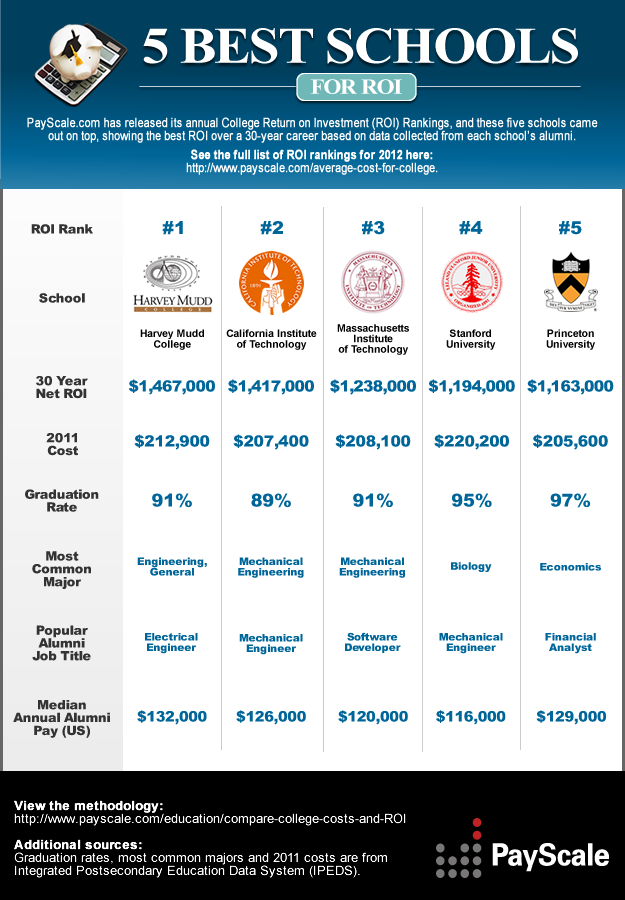
1. Do your research on salary levels for your field and school. There is plenty of information online regarding salaries of grads of each school, especially if it is a US school. This will give you a good general indication,. See Payscale.com or the college ROI report.
2. Do your research on percentage of employment post-graduation – understand your chances of actually finding a job after you graduate. The schools themselves and other accessible information sources are available so you can understand this factor.
3. Make a decision trying to foresee the future. One way you can do this is by consulting with a "future you" - a mentor from a background similar to yours who has been through the process and can guide you to make the right decisions. You can find people like that on the GradTrain website.

Our global society definitely needs sociologists, social workers, historians etc., but when you make decisions on your field of study, you need to see how this will impact your life. If you find a job in academia and stay in the US, you may be able to sustain yourself, though if not, you may need to change careers at a later age if you cannot sustain yourself. The key is to make your decisions based on facts on just on gut feelings.

Below is an infographic regarding the 5 best schools in the United States in terms of return on investment (ROI).

Best Schools for College Return on Investment (ROI)
 

Where to study abroad? Take the quiz and find out!


Wondering which country is right for you for your study abroad dreams? Take the quiz to find out which country is right for you. Let's Play!

Obama's immigration reform for international students – time to celebrate?

There has been a lot of buzz over the past few days regarding President Obama’s immigration reform that impacts international student visas and their ability to stay and work in the United States after they graduate. This post attempts to clarify the implications of this reform and will help you determine – is it time to celebrate or is there still more work to be done before you can pack your bags and head to the plane. 

Photo credit: Darren Johnson
The facts
It’s best to hear about the reform directly from the source – see President Obama’s speech here.

“Are we a nation that educates the world’s best and brightest in our universities, only to send them home to create businesses in countries that compete against us?” he asked. “Or are we a nation that encourages them to stay and create jobs, businesses, and industries right here in America?”

According to President Obama's speech, it seems like a promising time for international students from around the globe to have the opportunity to stay in the United States and pursue a career there. Is that the case?

The president’s executive action provides specific benefits relevant to international students. We have summarized them here for you in an easy to understand manner. The key points are:

  1. Expanding Optional Practical Training (OPT) – students will be able to stay in the US and work for longer periods of time for work that is considered professional training in their field of study (for example - lawyers who graduate from an LLM degree can work for a law firm in the US). Currently, OPT is for a 12 month period. The intent is to extend that timeframe, though it has yet to be determined by how long.
  2. STEM authorizations – students from the fields of Science, Technology, Engineering and Mathematics will be able to stay for even longer periods in the US for OPT. Currently, STEM graduates can get a 17 month extension on their OPT. The intent is to extend that timeframe, though it has yet to be determined by how long.
  3. Spouses of H1B visa holders will have an easier time extending their visas if the H1B holder is in the process of applying to be a lawful permanent resident (LPR).
  4. Entrepreneurs - if you are thinking of building a start-up company or know of a company in the US that would like to hire you, you may be in luck. The executive action seeks to "expand immigration options for foreign entrepreneurs who meet certain criteria for creating jobs, attracting investment, and generating revenue in the U.S."
Photo credit: "Uscapitolindaylight" by Kmccoy - en.wikipedia
If all of these terms related to US immigration seem unclear to you, go ahead and read our post on student visas to the United States

To summarize, the bottom line is positive for people from around the globe who want to study in the United States. Over the past decades, the US has not established an immigration policy that seeks to bring the best and the brightest to study and then work there. This is a step in that direction.

Only time will tell how much of this reform will be implemented, but you can be cautiously optimistic and continue to follow the developments as it is implemented.
To see how other people are impacted and to hear about learn from their experiences with immigration to the US, visit www.gradtrain.com

5 Ways Going to University in France Will Surprise You

Guest post by: Andrea Bouchaud

As the home to many world-renowned universities as well as being a cultural, linguistic and historical hub–bub, France is a natural choice for study abroad students. But before you pack your suitcase, there are a couple of things you need to know about going to university in France. Let’s take a look at 5 Ways Going to study in France Will Surprise You:

Photo Credit: Benh LIEU SONG

  1. Grades: The grading system for French universities is based off of twenty possible earned points, not one hundred, but that doesn’t mean that you can earn a 20/20 as your highest grade. French grades are best explained by the well-known vignette of The Divine Code. The Divine Code explains that 20 is reserved for God (or King in some versions), 19 for professors. No student gets a 20 - ever. It’s not you; it’s the system. Instead of 20, students aim for a 15. At most French universities, 15% of your grade is calculated on your participation, oral presentations, weekly summaries, and the devoir sur table (an in class assignment, usually an essay). The remaining 85% is a huge test taken at the end of the semester. Depending upon your study abroad program, you may be exempt from this test.
  2. Class Structure and Credits: The average class credit at a French University ranges from three to five credits. French college classes are worth more credits because they are divided into two sections or séances that meet from one to three hours per week. These 2 séances are the cours magistral (commonly known as CM) or lecture and the travaux dirigés (commonly known as TD) or lab.
  3. College Environment: The French college environment is just like French culture: formal. Students refer to professors as monsieur, madame or mademoiselle- no last name. As French professors are not always PhD prepared, you don’t refer to them as doctor or ask them their education level - this is rude. Another thing that is a no-no in a French classroom is constant questions. A French college classroom is one of learning from the professor, not one of interaction. Have questions for your French professor?  Ask them after class! The typical French professor doesn’t share his/her email with students so after class discussion is the way to go. Respect for the professor and classroom is crucial in a French university and adds to the formal environment. French students are expected to not interrupt the learning process so they bring notebooks to class, not a laptop. You’ll also notice that no cell phones buzz, no food eaten during class, no whispered conversations, and no leaving class. This formal college environment is a very important part of the French college experience. But it’s not just in the classroom. The lack of a university book store and sports teams also solidify the formal learning environment of a French university.
  4. Information Technology: The typical French student doesn’t rely on the internet as the main way to communicate with professors or keep current on campus activities. Flyers and the free Guide de l'étudiant (student campus guide) are still preferred methods over online communication. Although many aspects of the French college experience are old-school, your French professor will expect your rédactions or term papers to be typed.
  5. Parlez-vous français? One of the main reasons you’re studying abroad in France is to improve your French. Taking university classes in French can be extremely difficult but it’s the best way to really beef up your language skills. Your French professor won’t accept your rédaction in English so having at least adequate French skills is a must for your French study abroad.


Studying abroad in France is a great experience for many majors but cultural immersion and language fluency are key to a successful study abroad. Knowing these 5 tidbits of French university life in advance will help you to have a smoother and easier transition for your study abroad. Bonne chance!

-Andrea

Bio
Having studied abroad in Paris for a year, Andrea Bouchaud understands that living in the City of Light isn’t always easy. Her hands on experience with French culture and language immersion as an American student inspired her to write 2 books- Twenty in Paris: A Young American Perspective of Studying Abroad in Paris (2013) and The Paris Diaries: The Study Abroad Experience Uncensored (2014) both on Amazon’s Kindle Store. Connect with Andrea at twentyinparis.net


How to: find an apartment for study abroad


Leaving home for a study abroad experience can be a difficult decision in itself – never mind finding a place to live while you are thousands of miles away. The challenge of finding an apartment overseas is a conflict every student faces.


The first big decision you need to make is whether you want to go with program / university housing or with independent housing. Program housing means you are housed through the school you are studying abroad with, usually in dorms with other students in the same program. Independent housing means you get to live wherever you wish to explore. Finding your own apartment means being able to choose a safe neighborhood, budget your living expenses accordingly and search for all of the amenities you desire. Living independently means you are able to come and go as you please, hire a cleaning service and make sure you are conveniently located near classes, interesting sites or nightlife.

Comfort is key when you are living away from home. It is already nerve-wracking to try and speak a foreign language for four months, but coming home to an apartment that makes you feel at home is very important. Apartments dedicated to international students are rare to find –that is, unless you want to live in a dorm. By choosing independent housing, you have the option to live in a complex with local residents, or nearby American students. It’s your choice.
____________

This post was written by Christina Monteleone of Study Abroad Apartments. Through Study Abroad Apartments, you will not only be able to choose an apartment in a convenient location, but you will be to find other students traveling to the same destination, helping you find a roommate you share interests with, and maybe even mutual friends. Study Abroad Apartments helps students find apartments they love, and in locations not many other companies offer. If you are looking for roommates abroad, visit http://www.studyabroadapartments.com/find-a-roommate/


For more information about housing during your study abroad experience, be sure to check out: http://www.studyabroadapartments.com/